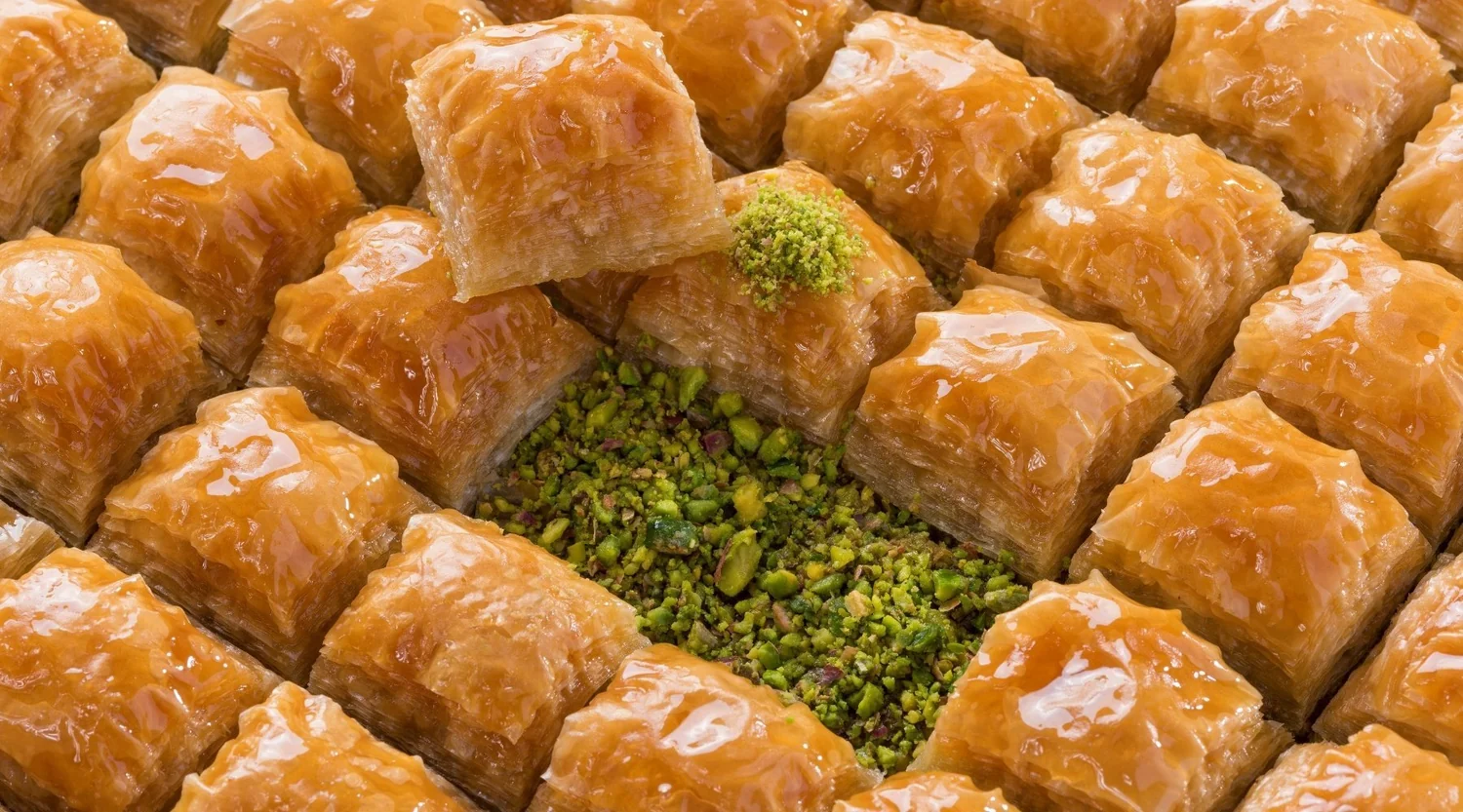
Baklava has been loved for hundreds of years and is still one of the most popular desserts in the world. Its crispy pastry, crunchy nuts, and sweet syrup come together to create a dessert that many people enjoy. Although the main recipe has stayed almost the same, different countries have added their own flavors and styles over the years.
There are many types of baklava available today in a wide range of shapes, fillings, and flavors. Some recipes are packed with pistachios, while others include walnuts, cream, chocolate, or shredded pastry. Every variety has its own special taste and tradition. In this blog, you will learn about ten popular baklava types that are enjoyed in different parts of the world.
Popular Baklava Varieties You Must Try
Pistachio Baklava
One of the most loved and everyone’s favorite types of baklava is pistachio baklava. It is made by placing finely chopped pistachios between thin layers of phyllo pastry. The pastry is baked until crisp and golden before being covered with a light sugar syrup that adds sweetness without making it soggy.
Furthermore, the rich flavor of pistachios makes this baklava stand out. The bright green filling also gives it an attractive appearance. Many people try this variety first because it is a traditional favorite.
Walnut Baklava
Walnut Baklava is another popular choice that has been enjoyed for many years. Instead of pistachios, it contains finely chopped walnuts layered between crispy sheets of pastry. The walnuts give the dessert a slightly rich, nutty flavor.
Some recipes also include a little cinnamon to add extra warmth and aroma. Its balanced sweetness makes it an excellent dessert to enjoy with tea or coffee.
Chocolate Baklava
Chocolate Baklava is a newer version of the traditional recipe. It combines the crisp layers of baklava with rich chocolate to create a dessert that feels both classic and modern. Some recipes also include hazelnuts or pistachios with the chocolate filling.
As a result, this variety has become popular among people who enjoy chocolate desserts.
Milk Baklava
Milk Baklava is lighter than many traditional baklava recipes. Instead of using only sugar syrup, it is finished with a mixture of milk and a small amount of sugar. Many recipes also use hazelnuts as the main filling.
The milk gives the dessert a softer taste and a lighter color. People who prefer desserts with gentle sweetness often enjoy this variety.
Cream-Filled Baklava
Cream-filled baklava is known for its rich, smooth center. Along with chopped nuts, it contains a creamy, milk-based filling that adds another layer of flavor.
The crispy pastry and soft filling create a wonderful contrast. Its creamy texture makes it a popular dessert during celebrations and family gatherings.
Bird’s Nest Baklava
Bird’s Nest Baklava is easy to recognize because of its beautiful shape. Thin pastry is carefully arranged into small nests before being filled with pistachios or walnuts. The finished dessert looks elegant and colorful.
Rolled Baklava
Rolled Baklava is prepared differently from the usual square pieces. The pastry is wrapped tightly around a generous nut filling before being baked until golden. After baking, a light syrup is poured over the rolls.
Carrot Slice Baklava
Carrot Slice Baklava gets its name from its large triangular shape. Although the name includes the word “carrot,” the dessert does not contain any carrots. It is cut into pieces that look similar to carrot slices.
Finger Baklava
Finger Baklava is made in small, thin rolls that are easy to pick up and eat. Each roll is filled with chopped nuts before being baked and lightly coated with syrup.
Shredded Pastry Baklava
Shredded Pastry Baklava, or Kataifi, is made with fine strands of pastry instead of flat phyllo sheets. The shredded pastry surrounds a nut filling and becomes wonderfully crispy after baking. A light syrup is added while the dessert is still warm.
Conclusion
Baklava is much more than a single dessert. Different countries have created their own recipes while keeping the traditional layers of pastry and nuts at the center of every version.
Each variety offers something a little different, whether it is the filling, shape, or sweetness. Learning about the different types of baklava is a great way to discover the rich traditions behind this famous dessert.
